
1. What Counts as ECG Electrode Skin Irritation?
Skin reactions following ECG electrode application can range from temporary redness to more significant adhesive-related injuries. Understanding the differences helps healthcare professionals determine the appropriate response.
1.1 MARSI: Medical Adhesive-Related Skin Injury
Medical Adhesive-Related Skin Injury (MARSI) refers to damage associated with the use of medical adhesives, including monitoring electrodes, wound dressings, and medical tapes.
According to the consensus definition established by McNichol and colleagues, MARSI occurs when erythema or another manifestation of skin abnormality, such as blisters, erosions, or skin tears, persists for 30 minutes or longer after adhesive removal.
Common types include:
- Skin stripping: Removal of superficial epidermal cells during adhesive removal.
- Skin tears: Physical separation of skin layers caused by mechanical forces.
- Irritant contact dermatitis: Inflammation resulting from direct exposure to irritating substances.
- Allergic contact dermatitis: An immune-mediated reaction to a specific allergen.
- Maceration: Softening and weakening of the skin caused by prolonged moisture exposure.
A 2026 systematic review published in the Journal of Wound Care reported a pooled MARSI incidence of 21% among ICU patients. The incidence varied across patient groups, demonstrating the importance of individualized skin protection strategies.
It is important to note that not every temporary red mark after electrode removal qualifies as MARSI. The persistence and characteristics of the reaction should be assessed.
1.2 Irritation vs. Allergy vs. Infection: How to Tell the Difference
A skin rash from ECG electrodes does not necessarily indicate an allergic reaction. Mechanical irritation, chemical exposure, and infection can produce overlapping symptoms.
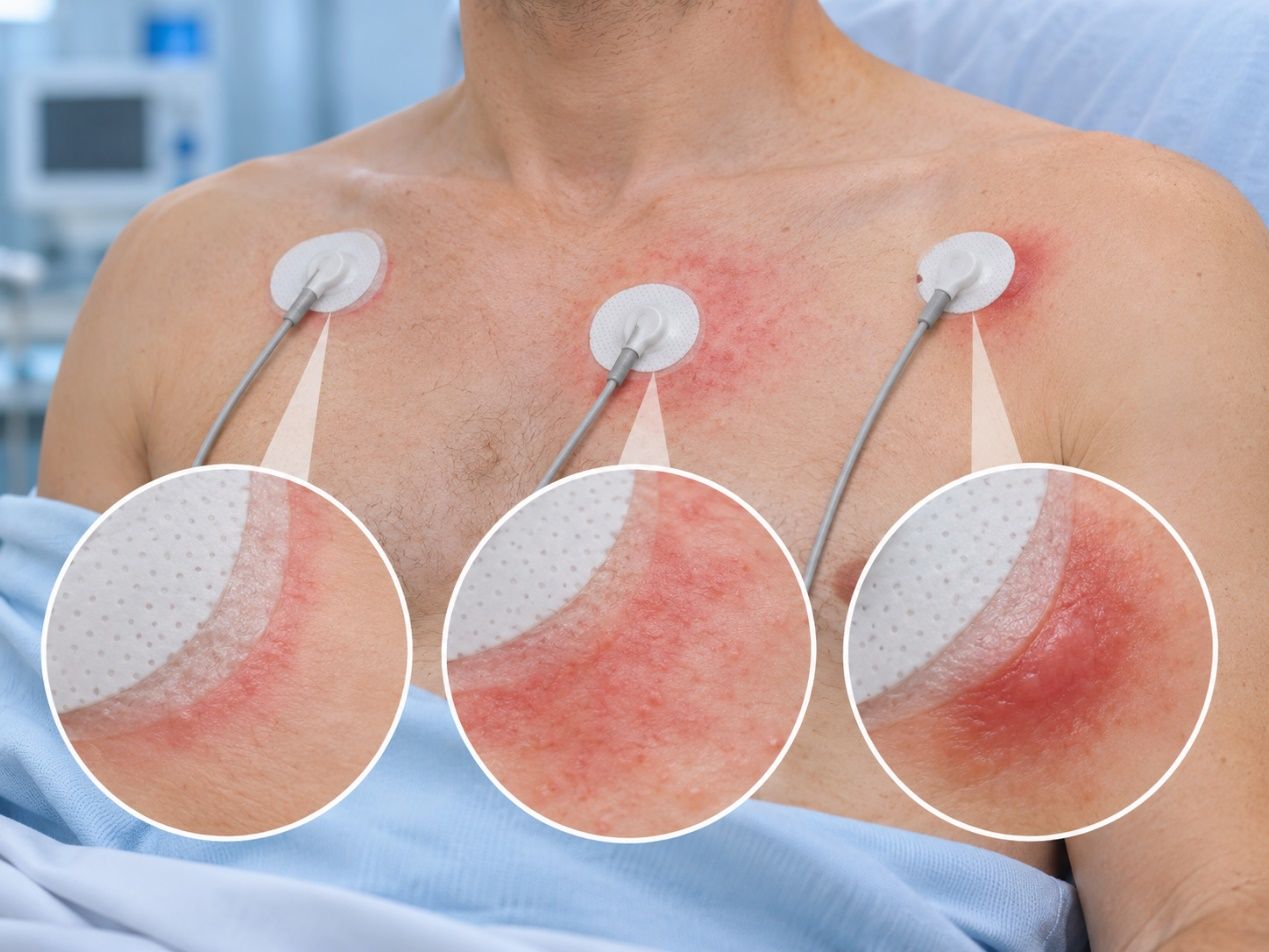
The following comparison provides a general clinical reference:
| Characteristic | Mechanical / Irritant Reaction | Allergic Contact Dermatitis | Possible Skin Infection |
|---|---|---|---|
| Symptoms | Redness, dryness, burning, tenderness | Intense itching, redness, swelling, blisters | Pain, warmth, swelling, possible discharge |
| Onset | During application or shortly after removal | Often 24–72 hours after exposure | Variable; may develop progressively |
| Appearance | Usually localized to the contact area | May extend beyond the original contact area | May show spreading redness or crusting |
| Common Cause | Adhesive removal, friction, moisture | Sensitivity to specific adhesive or gel ingredients | Bacterial or other microbial involvement |
| Response | Reduce mechanical stress and protect skin | Avoid suspected allergen and seek assessment | Medical evaluation may be required |
These patterns are not diagnostic rules. Persistent, severe, or worsening symptoms should be assessed by a qualified healthcare professional. Patch testing may be considered when allergic contact dermatitis is suspected.
2. Why Do ECG Electrodes Irritate Skin?
ECG electrode skin irritation generally results from several interacting factors, including adhesive strength, material composition, moisture, application techniques, and the patient's underlying skin condition.
2.1 Mechanical Damage: Adhesive Removal and Skin Stripping
Mechanical damage is one of the most important contributors to medical adhesive-related skin injury.
ECG electrodes use pressure-sensitive adhesives to maintain stable contact with the skin. During removal, the adhesive can exert pulling forces on the epidermis. If the bond is stronger than the skin's ability to withstand the applied force, superficial skin cells may be removed along with the electrode.
Repeatedly applying and removing electrodes in the same location increases the risk of cumulative skin damage.
This is particularly concerning for:
- Neonates, whose skin barrier is still developing.
- Elderly patients with thinner, more fragile skin.
- Patients receiving prolonged ICU monitoring.
- Patients with existing skin conditions or compromised skin integrity.
The adhesive strength required for reliable ECG monitoring must therefore be balanced against the need for gentle removal.
2.2 Chemical Irritation: Gels and Adhesives
The conductive gel and adhesive system are two important components that influence the skin-contact experience.
ECG electrodes commonly use different conductive gel formulations:
- Solid conductive gel: Provides stable skin contact and consistent electrical conductivity over the intended wear period.
- Wet conductive gel: Supports rapid electrical contact and signal acquisition, but may be more susceptible to moisture loss.
- Hydrogel: A water-based polymer material that can provide both electrical conductivity and adhesive properties, depending on its formulation.
These categories are not direct indicators of skin compatibility. Irritation depends on the complete formulation, adhesive chemistry, exposure duration, and individual sensitivity.
Some products may also leave adhesive residue after removal. Residue should be removed gently according to the product instructions rather than scrubbed aggressively, which may further damage the skin.
2.3 Allergic Contact Dermatitis
An ECG electrode allergy is different from ordinary mechanical irritation.
Allergic contact dermatitis is a delayed immune response that develops after exposure to a substance to which the individual has become sensitized.
Potential allergens associated with medical adhesives and electrode materials include:
- Acrylate and methacrylate compounds.
- Natural rubber latex in applicable product components.
- Colophony (rosin) and related resin substances.
- Certain preservatives or other formulation ingredients.
Published case reports have documented allergic contact dermatitis associated with (meth)acrylates in ECG electrodes and hidden colophony exposure in electrode products.
These cases demonstrate why manufacturers should evaluate the complete skin-contacting device, rather than considering only its primary backing material.
For products marketed as latex-free, the claim should be supported by appropriate material and supplier documentation covering the relevant device components.
Biological evaluation should also consider the applicable ISO 10993 standards, including ISO 10993-10 for skin sensitization and ISO 10993-23 for irritation.
2.4 Moisture and Skin Maceration
Sweat and prolonged exposure to moisture can weaken the skin's natural protective barrier.
When moisture becomes trapped beneath an electrode, the surrounding skin may become softened and more vulnerable to friction, adhesive stress, and irritation.
This is especially relevant for patients undergoing:
- Long-term cardiac monitoring.
- Exercise stress testing.
- Cardiac rehabilitation.
- Monitoring in hot or humid environments.
Breathable backing materials, such as suitable cloth and foam constructions, can help manage moisture around the electrode site. However, actual performance depends on the complete product design and should be evaluated under intended-use conditions.
2.5 Application and Removal Technique Errors
Even a well-designed ECG electrode can cause discomfort if applied or removed incorrectly.
Common technique-related problems include:
- Applying electrodes to oily, wet, or contaminated skin.
- Repeatedly attaching electrodes to previously irritated areas.
- Excessive skin abrasion during preparation.
- Removing electrodes quickly or at a steep angle.
- Applying electrodes over damaged or inflamed skin.
Proper application and removal techniques are therefore just as important as product material selection.
3. Who Is Most at Risk of ECG Electrode Skin Irritation?
Although skin irritation can affect any patient, certain populations require additional precautions.
Neonates and pediatric patients
Immature skin barriers and delicate epidermal structures make younger patients particularly vulnerable to adhesive-related damage.
Selection tip: Consider appropriately sized pediatric or neonatal electrodes with gentle adhesives and documented skin compatibility.
Elderly patients
Age-related changes, including reduced skin elasticity, dryness, and increased fragility, can make adhesive removal more traumatic.
Selection tip: Prioritize gentle adhesive systems, flexible backings, and products designed for comfortable removal.
Long-term ICU patients
Prolonged monitoring, repeated electrode replacement, edema, and multiple adhesive devices can increase cumulative skin exposure.
Selection tip: Evaluate products for their intended wear duration, skin compatibility, and reliable signal performance.
Patients with excessive sweating
Moisture can reduce adhesion and contribute to maceration, particularly during exercise testing and cardiac rehabilitation.
Selection tip: Consider breathable backing materials and adhesive systems designed for the relevant activity and environmental conditions.
4. How to Prevent Skin Irritation from ECG Electrodes
Preventing ECG electrode skin irritation requires a combination of appropriate skin preparation, correct placement, gentle removal, and suitable product selection.
4.1 Skin Preparation Done Right
Proper skin preparation helps maintain electrode adhesion while reducing unnecessary irritation.
Recommended practices include:
- Clean the application site: Remove excess oil, sweat, and surface contaminants using an appropriate skin cleanser.
- Dry thoroughly: Ensure the skin is completely dry before applying the electrode.
- Manage excessive hair: Use clippers when necessary rather than shaving, which may create small cuts or additional irritation.
- Avoid excessive abrasion: Skin abrasion should only be performed when required by the monitoring protocol and product instructions.
Should alcohol be used before applying ECG electrodes?
The answer depends on the electrode's Instructions for Use (IFU) and the patient's skin condition. Some products advise against alcohol, particularly for pediatric skin, while others allow its use under specific circumstances.
For example, 3M Red Dot electrode instructions advise avoiding alcohol preparation for pediatric skin and ensuring that the application site is completely dry if an alcohol wipe has been used.
Therefore, cleaning with an appropriate cleanser and allowing the skin to dry is a practical starting point. Alcohol should not be treated as a universal requirement.
4.2 Placement and Electrode Replacement Schedule
Correct electrode placement supports both signal quality and skin protection.
Healthcare professionals should follow the appropriate anatomical landmarks and maintain consistent lead positioning to ensure reliable ECG recordings.
For continuous monitoring, replacement schedules depend on the electrode design, intended wear duration, monitoring system, and hospital protocol.
Many clinical protocols recommend checking and replacing monitoring electrodes approximately every 24 hours. Other products have been tested for longer wear periods, including up to 72 hours.
A 24–48-hour interval may be appropriate for certain monitoring applications, but it should not be considered a universal rule.
Best practices include:
- Assess electrode sites periodically.
- Replace electrodes according to their IFU and clinical protocol.
- Consider alternative application sites when replacement is necessary and clinically appropriate.
- Avoid repeatedly applying electrodes to the same irritated area.
- Maintain correct anatomical placement and signal quality during repositioning.
For standard diagnostic ECG procedures, refer to established 12-lead ECG electrode placement guidelines.
4.3 Gentle Removal Technique
Correct removal is essential for reducing skin stripping and unnecessary discomfort.
Healthcare professionals can follow these steps:
- Loosen the electrode edge gently.
- Support the surrounding skin with the other hand.
- Slowly fold the electrode back over itself, keeping it close and parallel to the skin.
- Continue peeling gradually rather than pulling upward.
- Where appropriate, follow the product IFU for using water or another approved method to loosen the adhesive.
For example, some electrode instructions recommend soaking the electrode with water before gently peeling it away.
Avoid forceful pulling, rapid removal, and unnecessary scrubbing of adhesive residue.
4.4 Choosing Skin-Friendly ECG Electrodes
Product selection plays an important role in reducing skin irritation, particularly for patients requiring repeated or prolonged monitoring.
When evaluating ECG electrodes for sensitive skin, consider four important characteristics:
1. Gentle, low-irritation adhesive
A suitable pressure-sensitive adhesive should provide sufficient attachment while allowing controlled removal. Claims such as hypoallergenic should be supported by appropriate testing and documentation.
2. Skin-compatible conductive gel
The gel should provide reliable electrical contact while demonstrating appropriate biological compatibility for its intended application.
3. Breathable backing materials
Cloth, nonwoven, and suitable foam backings can offer flexibility and help manage moisture. Material selection should consider patient activity, application duration, and monitoring requirements.
4. Verified biocompatibility
Manufacturers should provide relevant biological evaluation documentation, including irritation and sensitization assessments under the applicable ISO 10993 framework.
For healthcare facilities seeking comfortable electrodes for routine and prolonged monitoring, cloth monitoring electrodes can be considered when their specifications match the intended clinical application.
4.5 Skin Barrier Products
Skin barrier films and other protective products may help protect vulnerable skin in patients who require frequent adhesive applications.
However, their use should be evaluated carefully.
- Select products intended for the relevant clinical application.
- Ensure compatibility with the electrode adhesive system.
- Allow the barrier product to dry completely before electrode placement.
- Avoid applying oily creams or lotions beneath electrodes unless specifically approved.
Some barrier products may interfere with electrode adhesion or electrical contact. Their use should therefore follow clinical guidance and manufacturer instructions.
5. What to Do If Skin Is Already Irritated
If a patient develops redness or discomfort after ECG electrode removal, the first priority is to avoid further mechanical or chemical stress.
A practical approach includes the following steps:
Step 1: Gently clean the affected area
Use lukewarm water and a mild, appropriate cleanser to remove surface residue. Avoid vigorous rubbing, alcohol, or harsh cleaning agents on irritated skin.
Avoid applying creams directly beneath a new electrode unless compatibility has been established.
Step 2: Support skin recovery
Where clinically appropriate, use a gentle, fragrance-free moisturizer or an approved skin barrier product after the skin has been cleaned and dried.
Step 3: Monitor the skin condition
Observe the affected area for persistent redness, itching, swelling, blistering, or other changes. Document the reaction and assess whether it persists beyond the 30-minute MARSI threshold.
Seek medical assessment if symptoms worsen, spread, or fail to improve.
Blisters, open skin, increasing warmth, significant pain, discharge, or fever warrant prompt clinical evaluation, as infection or more significant skin injury may be present.
What if continuous ECG monitoring is still required?
Monitoring should not be discontinued solely because of minor electrode-related irritation without appropriate clinical assessment.
Depending on the patient's condition, healthcare professionals may consider:
- Repositioning electrodes to clinically appropriate intact skin.
- Selecting an alternative electrode with a more suitable adhesive system.
- Using another clinically appropriate signal acquisition method when available.
- Consulting the clinical team regarding ongoing monitoring requirements.
The goal is to maintain necessary cardiac monitoring while minimizing additional skin damage.
6. A Buyer's Checklist: Specifying Low-Irritation ECG Electrodes
For hospitals, distributors, and medical device procurement teams, selecting skin-friendly ECG electrodes requires more than comparing price and adhesive strength.
A comprehensive evaluation should consider biological safety, material construction, intended wear duration, and regulatory documentation.
The following checklist can support supplier evaluation.
| Evaluation Criteria | What Buyers Should Check |
|---|---|
| 1. Biocompatibility | Request relevant ISO 10993 evaluation reports, particularly irritation and skin sensitization assessments. |
| 2. Backing Material | Confirm whether the electrode uses cloth, nonwoven, foam, or another material, and evaluate breathability and flexibility. |
| 3. Conductive Gel | Understand the gel formulation and whether its performance is suitable for standard ECG, continuous monitoring, or Holter applications. |
| 4. Material Declarations | Confirm latex-free and DEHP-free claims where required, supported by appropriate component-level documentation. |
| 5. Adhesive Performance | Evaluate adhesion, removal comfort, skin residue, and signal stability through sample testing. |
| 6. Manufacturer Qualifications | Verify applicable CE MDR documentation, FDA 510(k) clearance where relevant, and ISO 13485 quality management certification. |
A few additional considerations are particularly important during supplier qualification.
Biocompatibility documentation
ISO 10993-1 provides the overall framework for biological evaluation. ISO 10993-23 addresses irritation testing, while ISO 10993-10 addresses skin sensitization.
Buyers should request reports relevant to the complete device, its materials, and the intended contact duration rather than relying solely on general statements such as skin-friendly or non-irritating.
Clinical performance and intended use
An electrode designed for a short diagnostic ECG may not be suitable for prolonged Holter monitoring.
Check signal quality, electrode impedance, adhesive performance, and the manufacturer's stated wear duration under the intended application conditions.
Regulatory and quality qualifications
CE MDR documentation and FDA 510(k) clearance should be checked against the specific device and intended market. ISO 13485 certification should be verified for the manufacturer's applicable quality management scope.
It is also important to distinguish equipment standards from electrode requirements. IEC 60601-2-27 addresses the safety and essential performance of ECG monitoring equipment; it is not, by itself, a standalone certification for disposable ECG electrodes.
Request samples before making a purchasing decision.
Sample evaluation allows procurement teams and clinical users to assess adhesion, removal comfort, skin compatibility, and signal performance under realistic conditions.
For hospitals, distributors, and medical device brands looking for a reliable ECG electrode manufacturing partner, it is also worth evaluating the supplier's production capabilities, quality control processes, customization options, and regulatory support.
Request Samples to evaluate electrode performance and discuss your specific procurement requirements.
FAQ
Can you be allergic to ECG electrodes?
Yes. Some individuals may develop allergic contact dermatitis in response to specific ingredients in ECG electrode adhesives or conductive gels. Potential allergens include certain acrylates, methacrylates, and resin-related substances such as colophony. However, most redness after electrode removal does not automatically indicate an allergy. Persistent or recurring reactions should be evaluated by a healthcare professional, who may recommend patch testing.
How long can ECG electrodes stay on?
The appropriate wear duration depends on the electrode's design, intended application, and manufacturer's Instructions for Use. Many continuous monitoring protocols recommend checking and replacing electrodes approximately every 24 hours, while certain products are designed and tested for longer wear. Holter and ambulatory ECG electrodes should be used according to their specific IFU. Electrodes should also be replaced when adhesion or signal quality becomes inadequate.
Why is my skin red after removing ECG electrodes?
Redness after electrode removal may result from temporary pressure-related changes, adhesive traction, skin stripping, or irritant contact dermatitis. Under the MARSI consensus definition, erythema that persists for at least 30 minutes after adhesive removal qualifies as an adhesive-related skin injury. Itching, delayed onset, or reactions extending beyond the electrode area may suggest allergic contact dermatitis and warrant professional assessment.
What are the best ECG electrodes for sensitive skin?
The most suitable ECG electrodes for sensitive skin generally combine a gentle, well-characterized adhesive system, skin-compatible conductive gel, flexible and breathable backing material, and appropriate biological evaluation documentation. Cloth or foam electrodes may be worth considering, depending on the monitoring application. Buyers should also evaluate removal comfort, intended wear duration, signal performance, and relevant ISO 10993 test reports before selecting a product.
Should skin be cleaned with alcohol before applying ECG electrodes?
Not necessarily. Alcohol use depends on the electrode manufacturer's IFU, the patient's skin condition, and the clinical protocol. Some products specifically advise against alcohol, particularly for pediatric patients, while others permit it in certain situations. In general, the application site should be clean, dry, and free from excessive oil or lotion. If alcohol is permitted and used, ensure the skin is completely dry before electrode application.
Conclusion
ECG electrode skin irritation is influenced by multiple factors, including adhesive strength, conductive gel composition, backing materials, application techniques, and individual patient skin conditions.
Reducing the risk of MARSI requires a combination of appropriate skin preparation, correct electrode placement, gentle removal, and careful product selection.
For healthcare facilities and medical procurement professionals, choosing electrodes with suitable adhesive performance, breathable backing materials, and documented biological compatibility can help support patient comfort and reliable ECG monitoring.
At INTCO ECG, we understand the importance of balancing skin compatibility, dependable signal performance, and consistent manufacturing quality. Whether you are sourcing standard monitoring electrodes or developing customized products for specific clinical applications, our team can help you explore suitable solutions.
Looking for reliable ECG electrodes for your market? Contact INTCO ECG to request samples and discuss your OEM/ODM requirements.
References
- McNichol L, Lund C, Rosen T, Gray M. (2013). Medical adhesives and patient safety: State of the science: Consensus statements for the assessment, prevention, and treatment of adhesive-related skin injuries. Journal of Wound, Ostomy and Continence Nursing, 40(4), 365–380. https://doi.org/10.1097/WON.0b013e3182995516
- Barton A, et al. (2024). Medical Adhesive-Related Skin Injury at 10 Years: An Updated Consensus. Journal of Wound, Ostomy and Continence Nursing, 51(5S Suppl 5), S2–S8. https://doi.org/10.1097/WON.0000000000001116
- Xu Y, et al. (2026). Incidence and risk factors of medical adhesive-related skin injury among ICU patients: A systematic review and meta-analysis. Journal of Wound Care, 35(5), 428–437. https://doi.org/10.12968/jowc.2024.0404
- Corazza M, et al. (2020). A case of allergic contact dermatitis to (meth)acrylates in electrocardiogram electrodes. Contact Dermatitis, 83(2), 152–154. https://doi.org/10.1111/cod.13570
- Machovcova A. (2011). Colophony, a hidden allergen on ECG electrodes in a boy after cardiovascular surgery. Pediatric Dermatology, 28(3), 345–347. https://doi.org/10.1111/j.1525-1470.2010.01091.x
- International Organization for Standardization. (2025). ISO 10993-1:2025 — Biological evaluation of medical devices — Part 1: Requirements and general principles for the evaluation of biological safety within a risk management process. https://www.iso.org/standard/10993-1
- International Organization for Standardization. (2021). ISO 10993-10:2021 — Tests for skin sensitization. https://www.iso.org/standard/75279.html
- International Organization for Standardization. (2021). ISO 10993-23:2021 — Tests for irritation. https://www.iso.org/standard/74151.html
- U.S. Food and Drug Administration. Electrocardiograph Electrodes — Class II Special Controls Guidance for Industry and FDA Staff. https://www.fda.gov/medical-devices/guidance-documents-medical-devices-and-radiation-emitting-products/electrocardiograph-electrodes-class-ii-special-controls-guidance-industry-and-food-and-drug
- 3M. Red Dot Monitoring Electrode 2268 — Instructions for Use. https://multimedia.3m.com/mws/media/2322373O/instructions-for-use-2268-3-red-dot-soft-cloth-mon-electrode.pdf
- International Electrotechnical Commission. IEC 60601-2-27:2011 — Particular requirements for the basic safety and essential performance of electrocardiographic monitoring equipment. https://webstore.iec.ch/en/publication/2638


